
If you are Desi — Indian, Pakistani, Bangladeshi, Nepali or Sri Lankan — and looking for a flat in Riga, most advice you will find stops at documents and deposits. The real reasons Latvian landlords turn down Desi tenants are smaller, and nobody says them out loud. An owner letting a single flat often decides in the first five minutes of the viewing — and those five minutes are full of tiny signals.
At diffeRENT we run flat viewings in Riga's centre and Old Town every week, and many of the people we show flats to are Desi students and professionals. Most of these red flags come from habits that are completely normal back home but read very differently to a Latvian owner. None of them is about where you come from, and every one is easy to fix. (New to the city? Start with our guide on how to rent an apartment in Riga as a foreigner.)
The 8 red flags at a Riga flat viewing — and how to fix each one
1. You don't know when you're moving in — or for how long

What the landlord thinks: "If they haven't planned this, they won't plan the rent either." An owner prices and schedules around an exact start date and a lease length. "Sometime next month, maybe six months, maybe a year" sounds like a tenant who could leave in week three.
Back home vs Riga: At home a flat is often found through a cousin or a broker a week before you move, and plans stay flexible. Riga owners plan one to two months ahead and want a fixed answer.
Do this instead: Arrive with a date and a term: "From 1 December, for 12 months." If your visa or job start is not fixed yet, say what it depends on and when you will know.
2. Not everyone who will live there comes to the viewing

What the landlord thinks: "Two people came; how many will actually move in?" The fear of an overcrowded flat — and of meeting the real tenants only on move-in day — is the most common reason we hear for a refusal.
Back home vs Riga: It is normal for one friend or relative to "see the flat" for the whole group. A Latvian owner wants to meet every person who will sleep under their roof.
Do this instead: Bring every future occupant, or at least introduce them by video call during the viewing. Say the number clearly, and make sure every name goes into the lease.
3. You arrive late

What the landlord thinks: "Late today, late with the rent tomorrow." In Latvia ten minutes late is late, and many owners leave after fifteen.
Back home vs Riga: We all joke about "Indian Standard Time", and at home 20 minutes late is still on time. In Riga the joke stops at the door.
Do this instead: Be at the door five minutes early. If something goes wrong, call before the start time — a call, not a WhatsApp message sent at the appointed minute.
4. You're dressed for the wrong season

What the landlord thinks: Sandals in November or a thin jacket at −10 °C read as "just arrived, not prepared for life here — and maybe short of money". Owners want tenants who are settled, not surviving.
Back home vs Riga: Most Desi newcomers face their first real winter here, and the jacket packed in Delhi, Lahore or Dhaka is rarely enough for January in Riga.
Do this instead: Dress for Riga weather: a proper winter coat and closed shoes from October to April, clean and simple clothes all year. Neat and weather-ready says "I live here now".
5. Your look feels out of date

What the landlord thinks: Fairly or not, owners read grooming as a preview of how you will keep their flat. A very old-fashioned haircut or an unkempt beard can signal "not settled in the city yet".
Back home vs Riga: A style that is perfectly normal in your hometown can look a decade old on a Riga street, where most people keep a simple, short, modern cut.
Do this instead: Get a fresh, modern cut from a local barber before you start viewings, keep facial hair trimmed, and arrive fresh. It is the cheapest upgrade to your application.
6. You leave the door open behind you
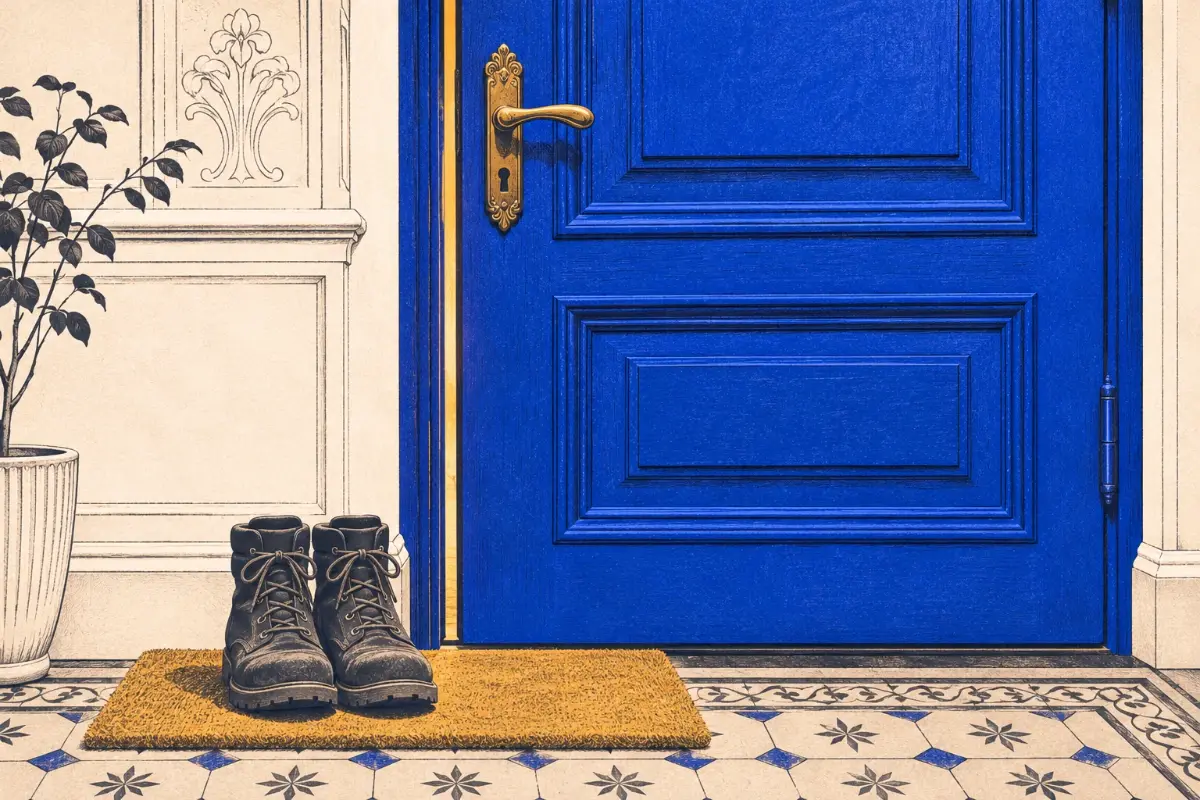
What the landlord thinks: "They don't care about heat, security or my things." Riga owners pay for heating by the season, and an open door to a cold stairwell is noticed instantly.
Back home vs Riga: In a warm climate the door often stays open and nobody minds. In a Riga winter an open door means lost heat and a cold flat — the owner feels it immediately.
Do this instead: Close the door as soon as you step in, then take your shoes off — most Latvian homes are shoes-off. Two small gestures, and the owner relaxes.
7. Your language is too casual or too demanding

What the landlord thinks: "Bro", "boss", "give me final price" or a list of demands before "hello" sound disrespectful to a Latvian owner, even when no offence is meant.
Back home vs Riga: "Bhai", "boss", "last price?" and bargaining hard are friendly and normal in a bazaar. Latvians are reserved and formal with strangers, so the same words sound rude.
Do this instead: Start with "Labdien" (good day), use "please" and "thank you", address the owner by name, and ask rather than demand. Negotiate after you have shown you are a good tenant, not before.
8. You don't remember which flat you asked about

What the landlord thinks: "Which apartment?" tells the owner you have sent the same message to fifty ads and theirs is not special. Many landlords and agencies list several flats at once.
Back home vs Riga: At home a broker usually handles many flats and many calls for you. In Riga you often speak to the owner directly, and they remember every conversation.
Do this instead: Before you call, save the address, price and ad link. Open with "I'm calling about the two-room flat on Elizabetes iela for €550" — not "Is the flat available?"
What a Riga landlord is really asking
Behind every viewing, an owner is quietly scoring four risks. Address each one before they have to ask.
| The landlord's worry | What reassures them |
|---|---|
| Will the rent arrive on time, every month? | An employment contract or university letter, a bank statement, a local IBAN |
| Will the flat come back in the same condition? | Care at the viewing, questions about the appliances, a signed handover act with photos |
| Will the neighbours complain? | A clear number of occupants, quiet hours respected, no surprise guests moving in |
| Will there be trouble with paperwork? | A proper written contract, a residence permit or visa in order, address declared correctly |
None of these is about where you come from. They are the same four questions an owner asks a Latvian student or a Swedish engineer. Your task is simply to answer them faster and more convincingly than anyone else in the queue.
Speak a little Latvian — it opens more doors than fluent English
Five words of Latvian at a viewing do more than five minutes of polished English. They tell the owner you intend to stay, respect the country and will be easy to deal with when the boiler breaks.
You do not need to be fluent. You need a greeting, a thank-you and one sentence about yourself:
| Latvian | Meaning |
|---|---|
| Labdien! | Good day / hello |
| Mani sauc … | My name is … |
| Es strādāju … / Es studēju … | I work at … / I study at … |
| Patīkami iepazīties | Nice to meet you |
| Paldies! | Thank you |
Many Riga owners, particularly older ones, are more comfortable in Russian than in English. A few Russian phrases can rescue a conversation that is stalling.
Learning costs little. Riga City Council runs free Latvian courses for adult residents whose native language is not Latvian; places are listed on apkaimes.lv and usually fill within days of opening (LSM, January 2026). The Latvian Language Agency also offers free study materials at valoda.lv. Mention at the viewing that you are enrolled — it is a signal of commitment owners notice.
Cook what you love — but protect the flat
No Desi should give up dal, biryani or a proper tadka to rent a flat. What owners fear is not your recipes but what heavy frying and spice can do over a year: grease on cabinets, smells in curtains and sofas, and neighbours knocking on the door in a building with shared stairwells.
Most Riga flats are in older buildings with weak extractor fans and closed windows for half the year. That changes the routine:
- Ventilate every time. Run the hood on maximum, open a window for ten minutes after cooking, even in January. Latvians call it vēdināt and do it daily.
- Keep doors closed while cooking so smells stay in the kitchen, not the bedrooms and soft furnishings.
- Clean grease weekly. Hob, hood filter, tiles and the cabinet above the stove. Owners check exactly these spots at check-out.
- Mind the stairwell. Bin bags out the same day; nothing left on the landing.
- Say it at the viewing. "We cook at home, so we always run the hood and air the flat" turns an unspoken worry into a point in your favour.
The same goes for the rest of the property: report a leak or a broken appliance the day it happens, and photograph the flat at move-in. Owners remember the tenant who called about a dripping tap long after they forget the rent amount.
Have a life in Riga, not just an address
Owners trust people who are rooted. A tenant with a job, a routine and local friends is a tenant who will stay, pay and call before a problem grows.
- Mention what you do here. Running along the Daugava, a football league, a gym, a choir, a volunteering group — any hobby that ties you to the city gives the owner a picture of a settled person.
- Join something local. Sports clubs, language cafés, university societies and meetups are easy entry points, and they give you Latvian contacts who can vouch for you.
- Collect references. A short note from a previous landlord, an employer or a professor carries real weight. A Latvian name on that note carries more.
- Show curiosity about the country. Asking about the neighbourhood, the market, the best bakery nearby — owners often love their area and warm to someone who wants to know it.
- Be a quiet neighbour. Quiet after 22:00, greet neighbours on the stairs, no surprise guests moving in. In a small building, the neighbours often talk to the owner first.
Studying here? See also student accommodation in Riga: room in a shared flat vs private studio.
Make the paperwork your strongest argument
A tidy file is the fastest way to move from "maybe" to "yes". Owners who fear complications relax when the tenant is the one asking for a proper contract.
- Ask for a written lease. It protects you both, and in Latvia it is what you need for a residence permit application or an address declaration with the Office of Citizenship and Migration Affairs (PMLP). More in our guide to the rental agreement and address declaration in Latvia.
- Show stable income. An employment contract, a payslip or a scholarship letter, plus a Latvian or EU bank account for rent payments. Paying by bank transfer, never cash, builds a record.
- Have your status in order. A valid visa or residence permit, with the expiry date clearly beyond the lease start.
- Offer a deposit without haggling. A standard deposit is often one month's rent. Paying it promptly says more than any promise.
- Sign a handover act. A list of furniture and appliances with photos and meter readings, signed by both sides on the first day.
- Be clear about who lives there. Name every occupant in the contract. Unregistered extra tenants are the single quickest way to lose an owner's trust.
Know your rights
Everything above is about winning trust — not about earning a right you already have. In Latvia, refusing to rent to someone because of their skin colour or national or ethnic origin is prohibited when letting is the owner's economic or professional activity, and an agent who follows a discriminatory instruction can also be held responsible (Latvian Centre for Human Rights).
If an advert says "no foreigners" or a viewing is cancelled the moment your name is heard, keep the messages and screenshots. Help is free:
| Where to turn | What they do | Contact |
|---|---|---|
| Ombudsman's Office (Tiesībsargs) | Investigates and can require the practice to stop | Baznīcas iela 25, Rīga · +371 67686768 |
| Latvian Centre for Human Rights | Free consultation on discrimination cases | Skolas iela 21, Rīga · +371 67039290 |
| Courts | Civil claim, including non-pecuniary damages | Through a lawyer or with the Centre's advice |
Your Riga flat viewing checklist
- Know your move-in date and lease length ("1 December, 12 months")
- Save the address, price and ad link of every flat you contact
- Bring everyone who will live in the flat
- Arrive five minutes early; call if you are delayed
- Dress for the season, fresh haircut, neat and clean
- Close the door behind you and take your shoes off
- Greet with "Labdien", say please and thank you, ask rather than demand
- Carry a one-page file: ID or permit, job or study letter, references
- Say how you cook and ventilate before the owner wonders
- Offer a written contract, deposit and bank-transfer payments
Where diffeRENT fits in
At diffeRENT we manage flats in Riga's centre and Old Town on behalf of their owners. We meet tenants ourselves, judge them on the four questions above and nothing else, and sign proper written contracts that work for residence permits and address declarations. If you are looking for a flat or a room, start with our tenant page or read more in The Tenant Insider.
Sources
- Applications open for free Latvian language courses in Riga — LSM, 12 January 2026
- Riga municipality Latvian courses — apkaimes.lv
- Latvian Language Agency — valoda.lv
- Discrimination in access to services: where to seek help — Latvian Centre for Human Rights
Looking for a flat in Riga?
Apartments and rooms in Riga city centre and Old Town. Utilities included.
View available properties → WhatsApp